The challenge
Most PlayFab games need the same foundations. Sign in, player data, an economy, leaderboards and server logic, plus a way to manage the title without living in Game Manager. Small mistakes in token refresh, retries or economy setup tend to show up late, after launch.
The goal was a package that gives a Unity team those foundations on day one, with clear limits and documentation good enough to set up a fresh PlayFab title without guesswork.
What I built
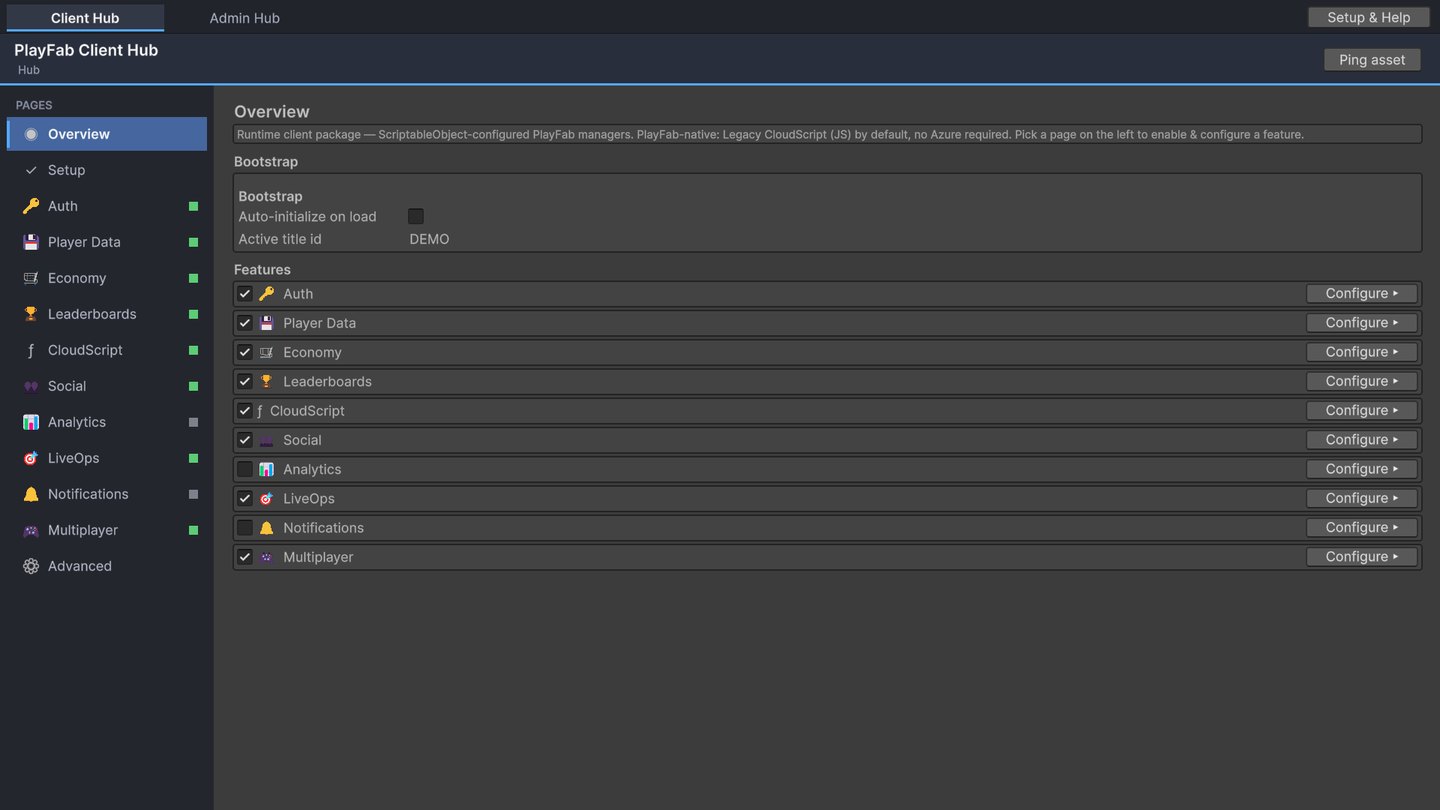
- A configurable client layer for auth, player data, Economy v1 and v2, leaderboards, CloudScript, social, LiveOps, notifications and multiplayer helpers
- One result pattern for every call, with Ok, Data and Error
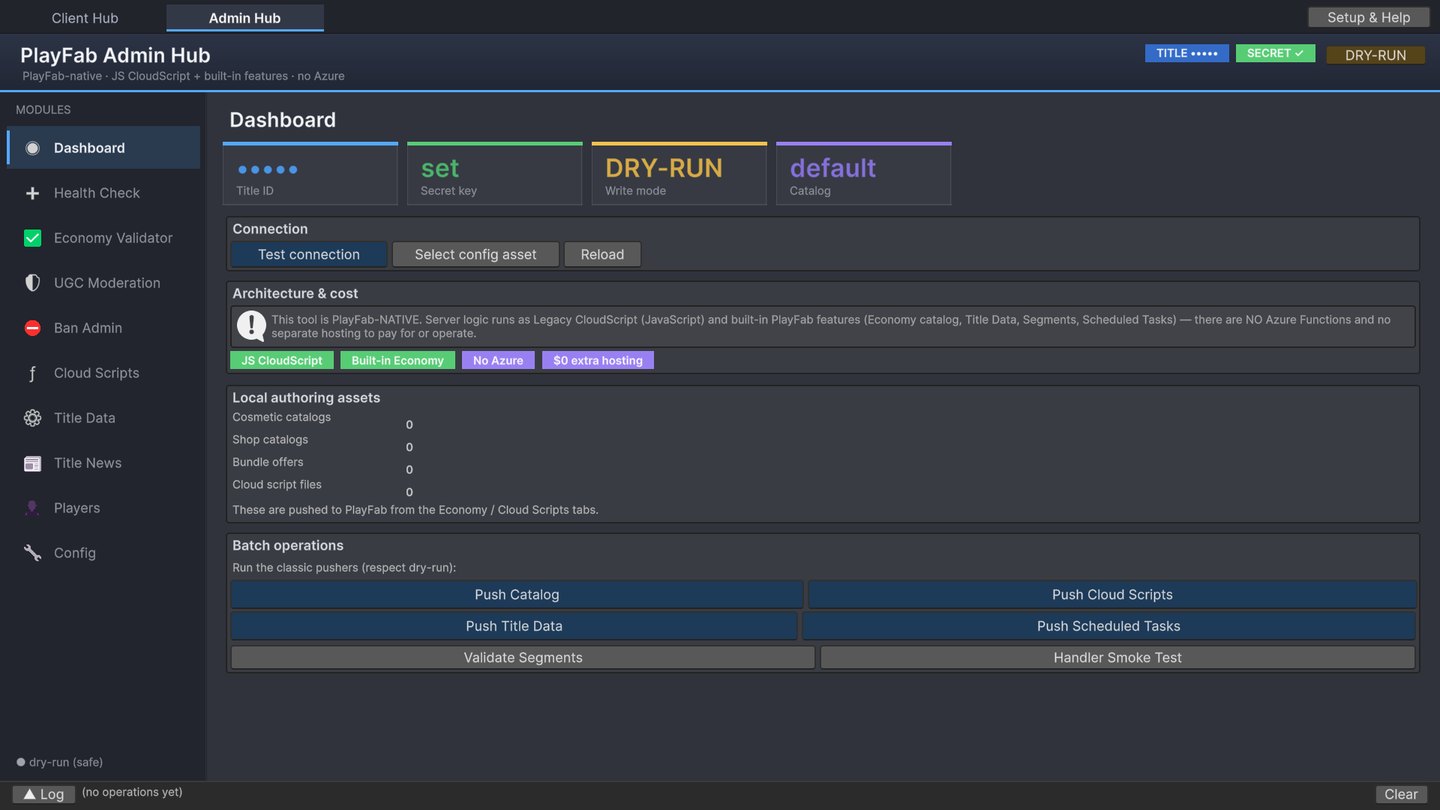
- An editor only Admin Hub for health checks, catalog, Title Data, CloudScript and ban tools, with dry run previews for supported writes
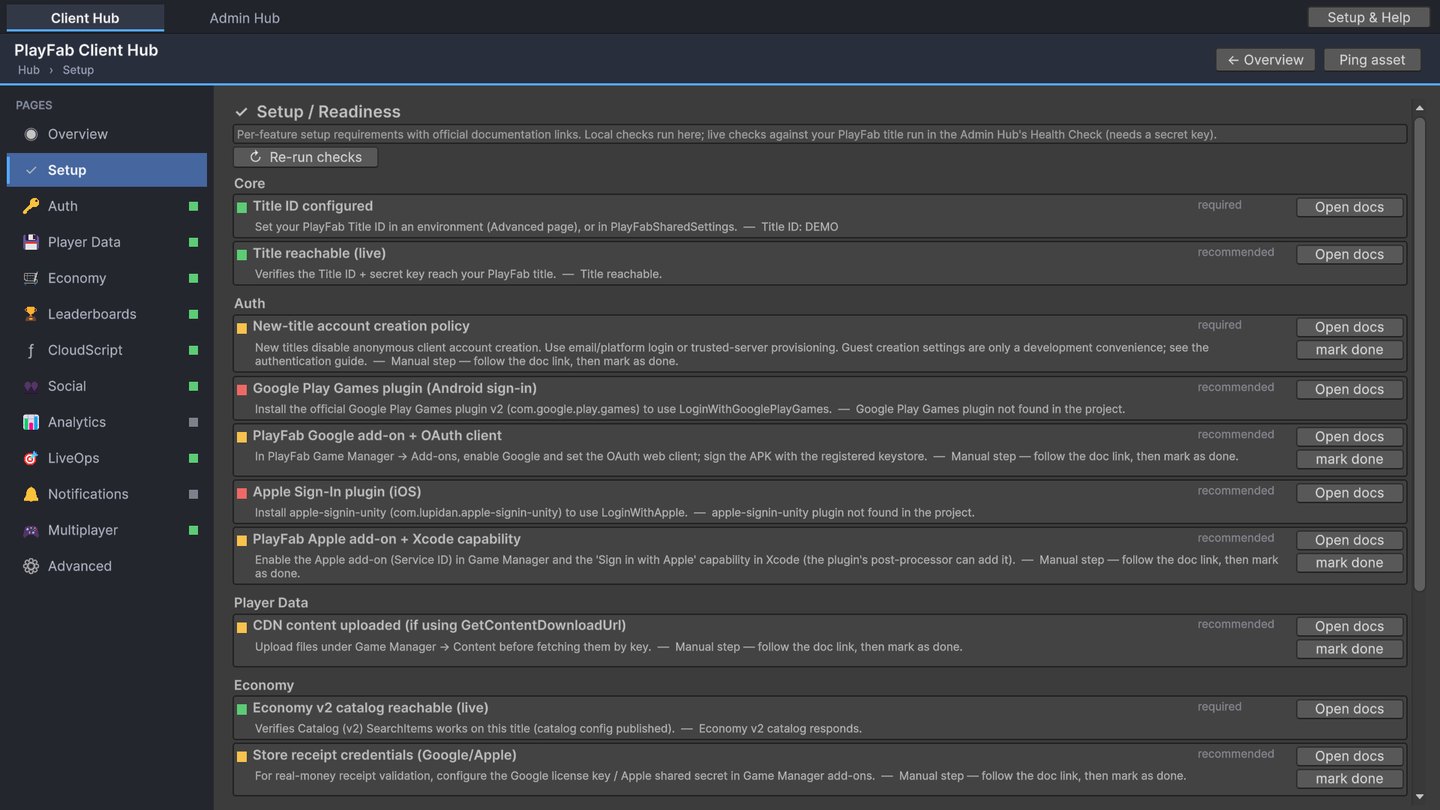
- Per feature setup checks linked to the official PlayFab documentation
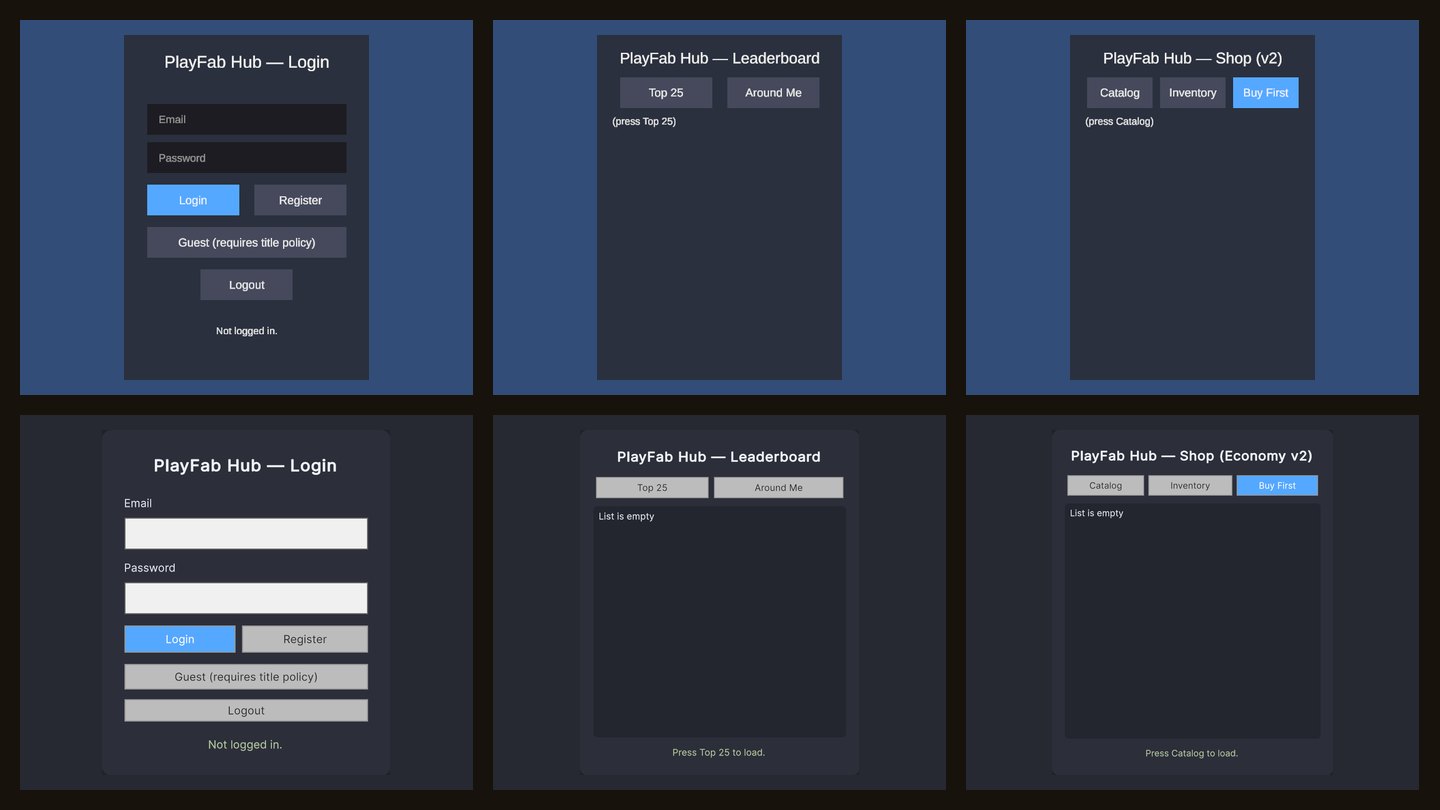
- Six demo scenes for login, leaderboards and an Economy v2 shop, in uGUI and UI Toolkit
- Offline HTML documentation, also published online on the studio site
Results
- Published on the Unity Asset Store on 27 October 2026, after Unity review
- Tested on Unity 2022.3 and Unity 6 with automated edit mode and play mode suites, plus live runs against a PlayFab title
- The default workflow needs no separate Azure Functions deployment, so client teams have one fewer service to run